

OIL SEALS
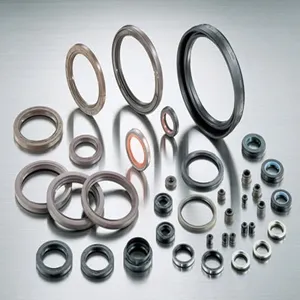
Oil seals work to prevent leakage of sealed objects such as lubricants from inside and also to prevent the entry of dust and contaminants from outside.
Oil seals are designed in a variety of shapes according to the applications and substances to be sealed.
Features :
- Lightweight, compact, and energy-saving
- High sealing performance by optimum lip design
- Low heat generation and long service life by highly self-lubricating rubber materials.
- High sealing performance and long service life by hydrodynamic ribs (Perfect Seal, Helix Seal, Super Helix Seal).
Oil seals are designed in a variety of shapes according to the applications and substances to be sealed.
Features :
- Lightweight, compact, and energy-saving
- High sealing performance by optimum lip design
- Low heat generation and long service life by highly self-lubricating rubber materials.
- High sealing performance and long service life by hydrodynamic ribs (Perfect Seal, Helix Seal, Super Helix Seal).
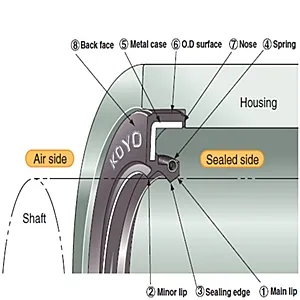
Component Functions
1. Main lip
The main lip is the most critical component of seals. its sealing edge contacts around the shaft surface in order to provide excellent sealing performance.
2. Minor lip
The minor lip prevents the entry of dust and contaminants from outside. As a lubricant, grease can be retained in the space between main lip and minor lip
3. Sealing edge
Section of the sealing edge is wedge-shaped to be pressed against the shaft surface and linearly contacts with the shaft to ensure sufficient sealing performance and suitability for operation at high peripheral speed.
4. Spring
The spring supplements the tension at the sealing edge to ensure tight contact between the shaft and the sealing edge and enhanced sealing performance. The spring also prevents the deterioration of main lip sealing performance caused by high heat or others.
5. Metal case
The metal case provides rigidity on seal, helping it settle on the housing securely. it also ensures easy seal handling and mounting.
6. O.D surface
Seals are fitted tightly into the housingbore generally. O.D surface prevents the oil leakage through fitting area, while excluding contaminants. This surface may be made of either metal or rubber and selected depending on the application.
7. Nose
The front end face of the seal is called the nose. Seals are usually mounted for the nose face the substances to be sealed. The nose is made of rubber and forms a gasket seal when compressed on housing shoulder.
8. Back face
The oil seal surface vertical to the center line of the shaft on the side that does not come in contact with substances to be sealed is generally called the back face. Either metal or rubber peripheral surface is available depending on the application.
1. Main lip
The main lip is the most critical component of seals. its sealing edge contacts around the shaft surface in order to provide excellent sealing performance.
2. Minor lip
The minor lip prevents the entry of dust and contaminants from outside. As a lubricant, grease can be retained in the space between main lip and minor lip
3. Sealing edge
Section of the sealing edge is wedge-shaped to be pressed against the shaft surface and linearly contacts with the shaft to ensure sufficient sealing performance and suitability for operation at high peripheral speed.
4. Spring
The spring supplements the tension at the sealing edge to ensure tight contact between the shaft and the sealing edge and enhanced sealing performance. The spring also prevents the deterioration of main lip sealing performance caused by high heat or others.
5. Metal case
The metal case provides rigidity on seal, helping it settle on the housing securely. it also ensures easy seal handling and mounting.
6. O.D surface
Seals are fitted tightly into the housingbore generally. O.D surface prevents the oil leakage through fitting area, while excluding contaminants. This surface may be made of either metal or rubber and selected depending on the application.
7. Nose
The front end face of the seal is called the nose. Seals are usually mounted for the nose face the substances to be sealed. The nose is made of rubber and forms a gasket seal when compressed on housing shoulder.
8. Back face
The oil seal surface vertical to the center line of the shaft on the side that does not come in contact with substances to be sealed is generally called the back face. Either metal or rubber peripheral surface is available depending on the application.
Oil seals work to prevent leakage of sealed objects such as lubricants from inside and also to prevent the entry of dust and contaminants from outside.
Features :
- Lightweight, compact, and energy-saving
- High sealing performance by optimum lip design
- Low heat generation and long service life by highly self-lubricating rubber materials.
- High sealing performance and long service life by hydrodynamic ribs (Perfect Seal, Helix Seal, Super Helix Seal)
Features :
- Lightweight, compact, and energy-saving
- High sealing performance by optimum lip design
- Low heat generation and long service life by highly self-lubricating rubber materials.
- High sealing performance and long service life by hydrodynamic ribs (Perfect Seal, Helix Seal, Super Helix Seal)